
“I’m a femboy, an IT guy, a gym rat — and very much alive”
An interview with Daniil Neonov. On the right to be yourself, an election campaign and life after leaving Russia. The accounts and opinions in his answers reflect his personal experience and perspective.
Daniil Neonov is an IT specialist, a femboy and a political activist. In 2026, he decided to run for a seat on the municipal council in Moscow’s Shchukino district. His campaign brought together local politics and openly queer self-expression — two things rarely seen together in Russia’s public life.
We spoke to Daniil about how identity becomes political, why he ran as an independent, his view of the conflict with Rassvet and Yabloko’s refusal to nominate him. We also talked about leaving Russia and what comes next.
In this interview
Being yourself
— How do you define your identity? What does it mean to you?
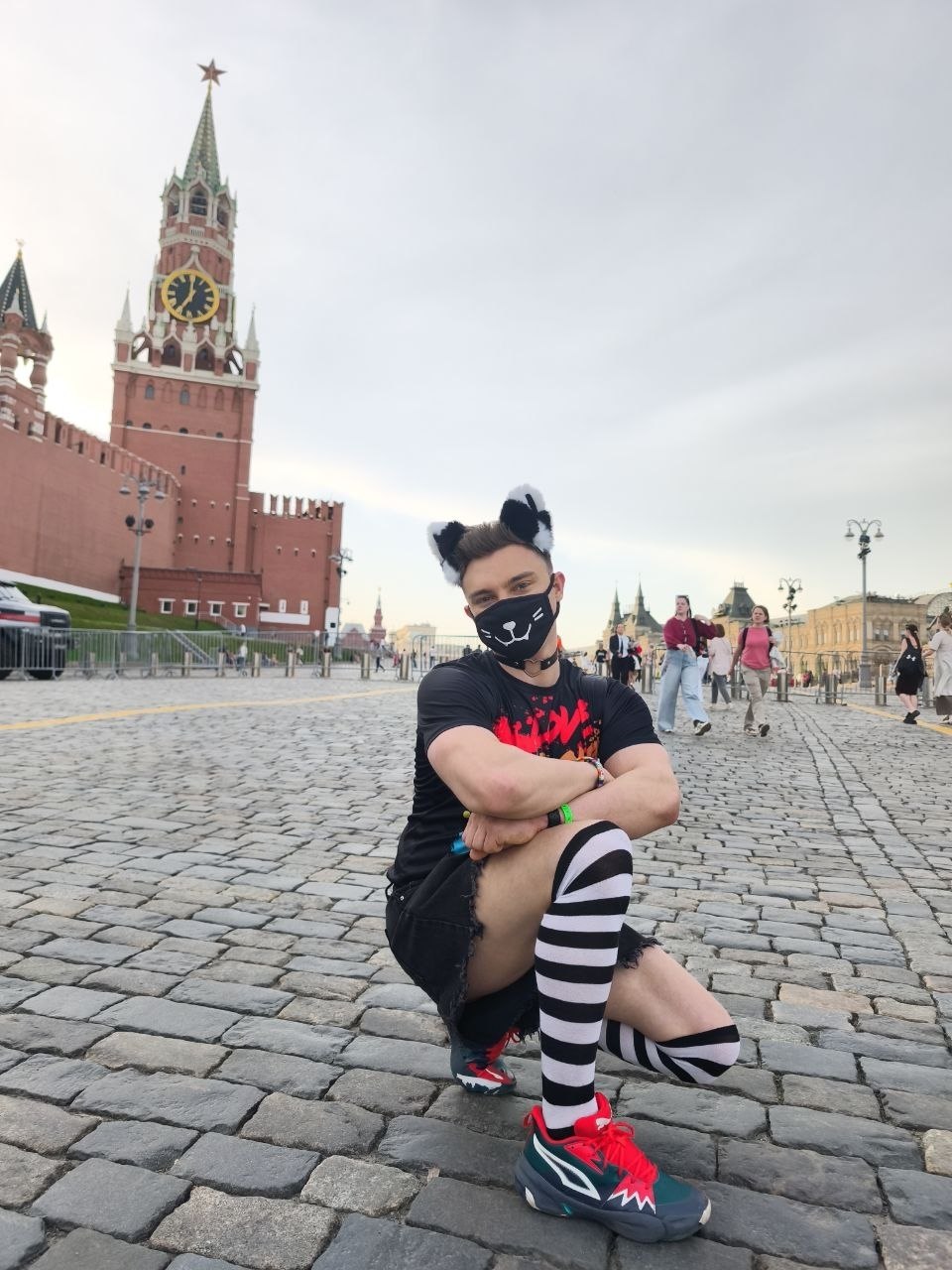
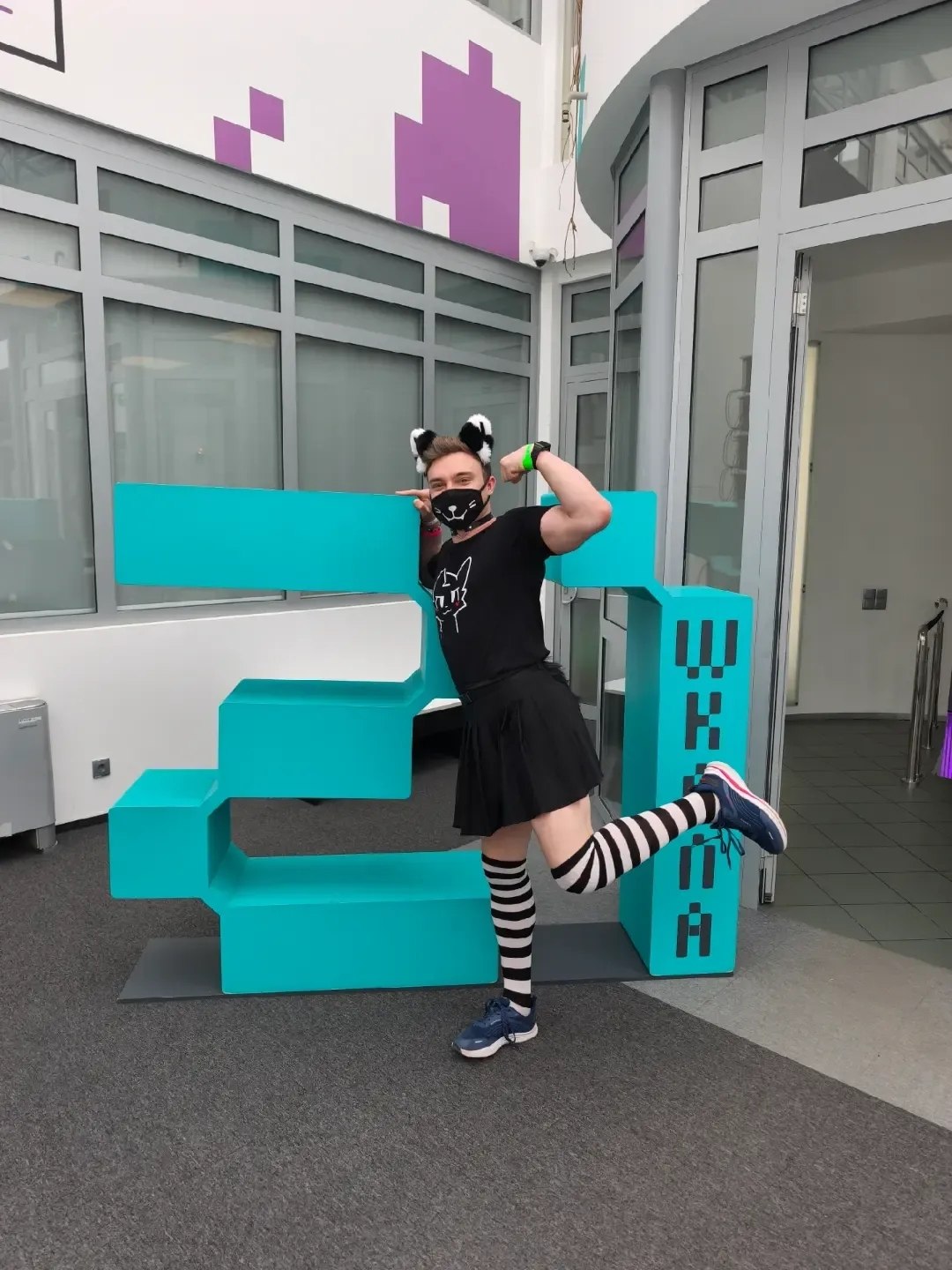
I’m a femboy, an IT guy, a gym rat — and very much alive, someone who isn’t afraid to be himself. I combine masculine and feminine traits, and they don’t clash. I can be a cute little femboy in a skirt and stockings, curling up, meowing and asking for cuddles like a kitten. Or I can be a cocky guy in Adidas with big biceps, holding you close and refusing to let go. In any of those moods, I’m real, warm and very much into physical affection.
I want to be myself without being afraid of it. So I won’t accept attempts to suppress my identity or make me “hide” it — even when they’re presented as “care” or “safety”. My catboy look is an extension of my identity, a part of me.
— How do your queer identity and your identity as a politician coexist?
As an openly queer person, I’ve experienced discrimination and restrictions on my freedom of speech and self-expression. In today’s Russia, being openly queer has inevitably taken on political significance. So my identity and my political views complement each other.
A femboy and a candidate
— How did the idea of a femboy councillor come about?
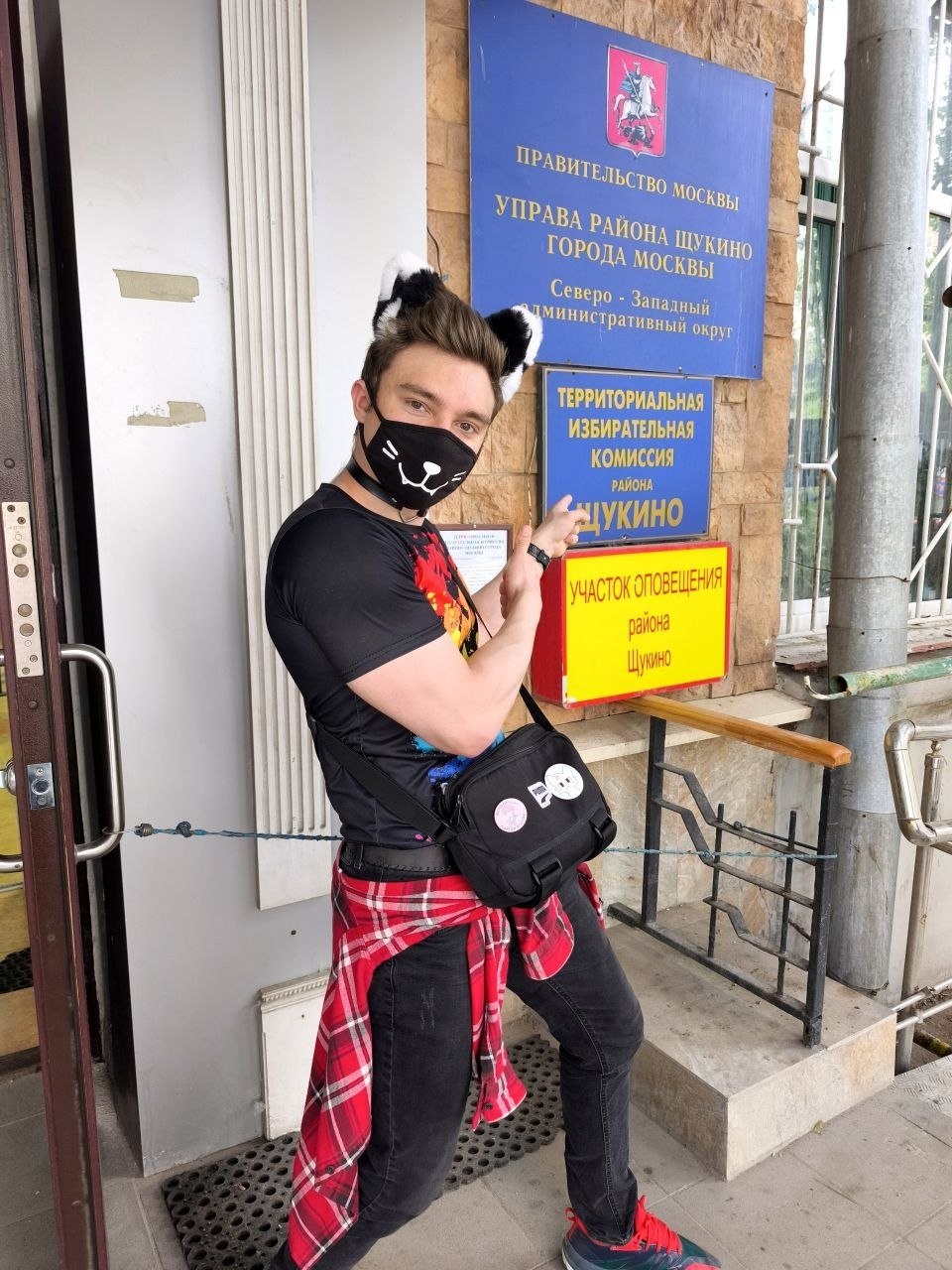
It all started when Yabloko was looking for candidates to nominate for the State Duma, the lower house of Russia’s parliament. I decided to take part. The party already knew I was openly queer. I spent a week gathering documents and went through several interviews.
At the same time, I decided to join the campaign in Shchukino, where they were also recruiting candidates. There were eight of us, and we agreed to help each other.
But at the last minute, Yabloko’s Moscow branch backed out and refused to nominate me because of the risks. By then, we’d already put together a small team. They said: “Run as an independent. We’ll help you anyway. The party doesn’t exempt you from collecting nomination signatures in any case.”
That’s how my “femboy and councillor” campaign began.
— Is being a femboy a political statement for you?
Yes and no. I didn’t become a femboy to make a political statement. First and foremost, it’s part of who I am and how I express myself — a reflection of my soft, feminine side.
But in today’s Russia, simply existing openly as a queer person in public inevitably takes on political meaning. When society or the state tries to decide how you’re allowed to look and which parts of yourself you should hide, refusing to hide becomes a statement too.
Fear and resistance
— Was it scary to be openly a femboy in politics? How did you deal with fears for your safety?
I got involved in politics before I came out as queer. I went to protests against the pension reform and the constitutional amendments. That’s where I first faced an administrative charge for taking part in a protest. I decided to be openly queer in politics in response to the state’s suppression of my queer identity.
Was I scared? Yes. But eventually, I pushed the fear down. To me, that’s what real resistance calls for: refusing to accept marginalisation, stigma and restrictions on your rights; finding ways around repressive laws rather than labelling yourself with the stigmatising disclaimer “this organisation has been designated extremist and banned”.
One example is Black people’s resistance to segregation in the United States, when they refused to give up their seats to white passengers on public transport. Stonewall was an example of direct resistance for queer rights. Another is the suffragette movement. Someone on my campaign team suggested I watch a film about Harvey Milk, and I saw myself in it. Change begins with openly rejecting the way things are, rather than silently accepting them.
I felt scared and anxious, but in those moments I reminded myself why I was doing it and kept going. I wanted to break through the atmosphere of fear created by the state, so people wouldn’t be afraid to come out and could see from my example that it was possible. I made videos, spoke openly about my identity while living in Russia, fought back against homophobes and kicked their asses.
The conflict with Rassvet
— Tell us about your conflict with Rassvet.
My conflict with Rassvet goes deeper than the story about a skirt. To me, it’s about a party that proclaimed democratic values and gradually began abandoning them.
The first warning sign came before the second party congress: people started challenging the results of the internal election in which I’d been elected to the Ethics Commission. Then an alternative “Vinogradov list” appeared.
At the congress, they initially tried to keep me out of the hall. Then Alexey Komelev gave me a badge labelled “entertainer”. After that, people began harassing me over my appearance in the party chats. The leadership did nothing to stop it.
Along with other dissenting members, I joined the Democratic Faction, which called for transparent procedures and adherence to the party’s principles. In response, we were called an “anti-party group” and accused of working with the Presidential Administration. Then a dispute broke out over the Moscow branch, and involvement in the Democratic Faction became potential grounds for refusing membership or expelling someone.
I proposed setting up an independent Committee on Guarantees and Legitimacy to monitor compliance with procedures and review complaints. The proposal was rejected. To me, that confirmed the central problem: the leadership makes and interprets the rules, decides who counts as a legitimate participant, and faces no independent oversight.
In September 2026, in Yerevan, I gave Ekaterina Duntsova a draft of a new party charter with appendices. Its central idea was to separate powers rather than concentrate authority in a single centre.
Before the third congress, the same thing happened again. The election commission didn’t respond to my application to stand for party chair and the Central Council, and my appeal received a brush-off. I see breaches of the rules and problems with the way the party membership register was compiled. In my view, the Ministry of Justice should investigate.
After I raised this, insults started flying in the organising committee’s chat. Before the congress, one Central Council member was removed from the chats and barred from participating. Komelev accused him of inflating the chat’s membership with bots, even though Komelev himself had shared a reusable invitation link. He also openly said he wanted to remove several people from the elections.
To me, these are all signs of the same problem: the party we wanted to make democratic began reproducing authoritarian practices itself. Rassvet isn’t learning from its mistakes and keeps losing activists.
Editor’s note. Daniil explains his position in more detail in his post about the conflict with Rassvet (in Russian).
Self-expression and safety
— In a comment to Pervy Otdel, Alexey Komelev said the request for you to change clothes was about safety, including concerns for the party and its members. You say Yabloko was worried about risks too. Should party members limit their self-expression for other people’s safety? Should parties take risks and respect their members even if they consider their appearance “provocative”?
In my view, if a party publicly declares its principles, it should live by them. How does it plan to build democracy outside the party if it can’t build it within?
I see attempts to suppress my self-expression as homophobia and discrimination dressed up as “safety” and “care”. My appearance is my business. No one has the right to tell me how to look or what to wear.
As I see it, there can be no change without taking risks.
Parties should respect their members, not be afraid or ashamed of them, even if their appearance seems “provocative”. Especially if the party claims to stand for inclusion, equality and freedom from discrimination.
Leaving Russia
— How did you leave? Was it a difficult decision?
I had to make that difficult decision because of the risks. After I was released, the pressure didn’t stop. Officers from the Centre for Combating Extremism were stationed outside my building, I received an electronic military summons, and I was banned from leaving the country. I managed to move to another address and then get out of Russia. The hardest part was probably not going back. Even after leaving, I still wanted to return.
I miss my country and consider myself a patriot. To me, loving your country doesn’t mean unconditional support for the state or its policies. A patriot isn’t someone who blindly supports the current direction, but someone who sees the problems, speaks about them and tries to do what they can.
Politics after leaving
— Do you plan to stay involved in politics while living abroad?
To do politics in Russia, you need to be in the country. What made my work valuable was that I was openly queer, living in Russia in 2026 and publicly involved in politics. How do you do politics when you can’t directly influence what’s happening inside the country?
I’ve already been invited to join a “party in exile”. But how does it intend to influence politics in Russia? It has neither official registration nor even a presence in the country. How will it contest elections, nominate candidates or campaign inside Russia?
Of course, I can do things from abroad. It’s not quite what I’d want… But I can work on sharing information, help people who have stayed in Russia and support those who have had to leave. Perhaps, over time, other kinds of work will emerge that feel meaningful to me.